
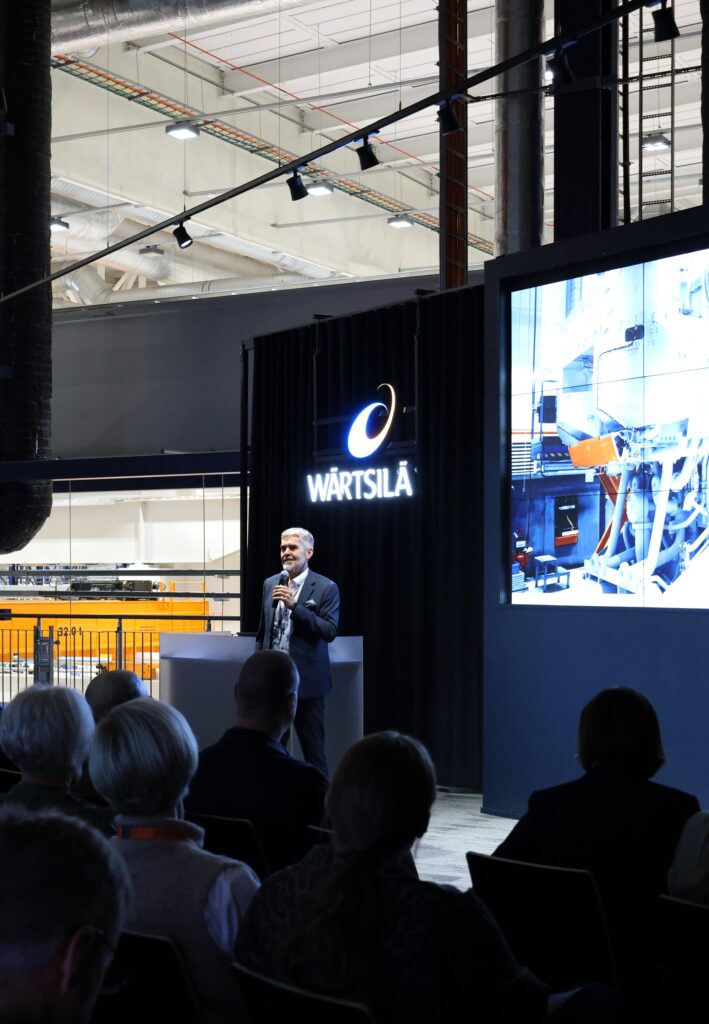
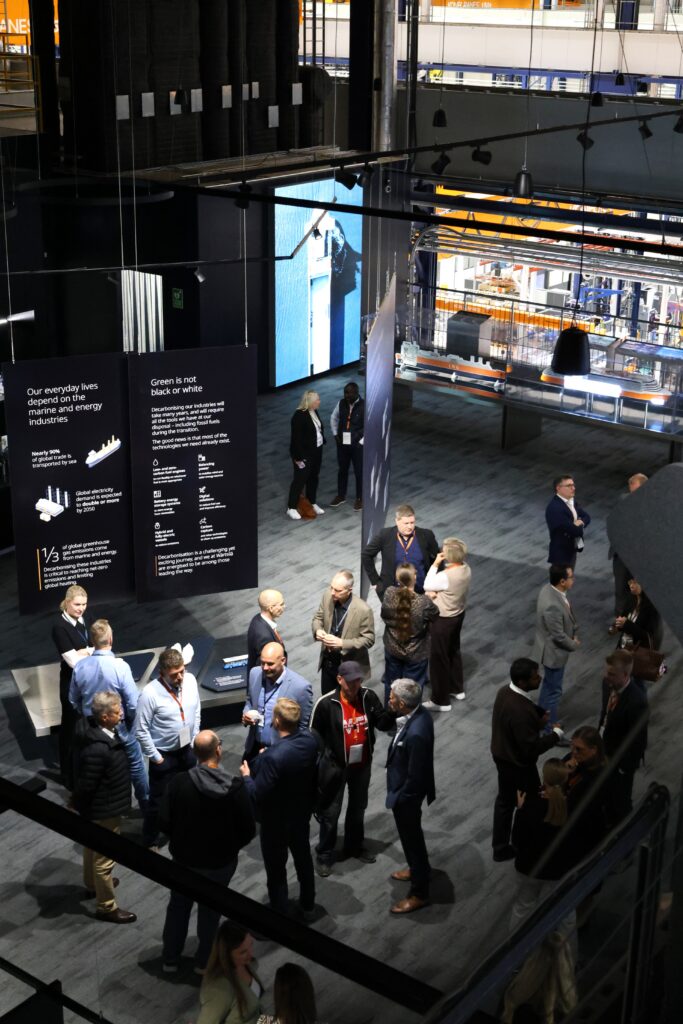
The WISE Midpoint Event, held on 22 September 2026 at Wärtsilä Sustainable Technology Hub in Vaasa, brought together ecosystem partners, researchers and industry experts to review progress and discuss the next phase of collaboration.
The event showed how the ecosystem is moving from ideas and consortium-building toward research, demonstrations and practical implementation. A clear message throughout the day was that the energy transition depends on collaboration across industry, academia, research institutions, technology providers and customers.
Events such as the WISE Midpoint bring partners, researchers and industry experts together to share progress, exchange ideas and turn research into practical next steps for the energy transition.
– Eleonor Hedström, WISE Ecosystem Lead
Flexibility and collaboration in the energy transition
The programme opened with a keynote on the energy transition and the growth opportunities it is creating. As electricity demand grows and renewable generation becomes more variable, flexible technologies will be essential to building resilient, cost-efficient and decarbonised power systems.
This broader perspective was reflected in WISE’s development from building awareness and partnerships to active project execution. Collaboration now connects research needs, technology development and future business opportunities, while the WISE co-innovation and co-research portfolio demonstrates progress across technologies that support more resilient, flexible and low-emission energy systems.
Against this backdrop, a key focus of the event was the progress achieved across the WISE project portfolio. Participants received updates from collaborative projects covering hydrogen technologies, materials for hydrogen handling, engine reliability, vibration technology and emissions measurement.
The project updates began with iHAPC (Integrated Hydrogen-Argon Power Cycle), which aims to demonstrate a hydrogen-argon power cycle. The project is exploring new approaches to autonomous zero-emission balancing power and energy system efficiency.
The BEST (Better Bearing, Seal and Vibration Technology) project then presented developments in bearing, seal and vibration technology, including an investigation into the use of wire-rope isolators for torsional vibration attenuation in engine systems.
MatH2 (Materials for Hydrogen Handling: storage, transfer and utilization) followed with an update on collaborative work involving materials for hydrogen handling, storage, transfer and utilisation. The project brings together industry and research partners to address performance, structural integrity and material compatibility challenges related to the hydrogen economy.
The afternoon programme shifted the focus to two co-research projects, EDE3 and METECH. EDE3 (Early Detection of Extreme Engine Events) is developing methods and tools for the real-time identification, characterisation and prevention of severe engine failures. In parallel, METECH (Exhaust Emission Measurement) is advancing measurement technologies and quantification methods for exhaust emissions from clean transportation solutions, including greenhouse gases and emissions from emerging fuels.
Looking ahead
Looking ahead, WISE will continue focusing on execution, impact evaluation and opportunities to take promising results further. The midpoint event underlined that progress in sustainable energy depends not only on individual technologies, but also on the shared ability to connect expertise, test ideas and turn collaboration into practical impact.